Real estate is the best long-term investment, according to more Americans than any other option in Gallup’s 2026 poll.
That does not mean everyone should rush out and buy a house. It does show that, even after years of affordability concerns, changing mortgage rates, stock market swings, and growing interest in cryptocurrency, Americans continue to trust real estate as a long-term wealth-building tool.
What Americans Chose in 2026
Gallup asked Americans which investment they believe is best over the long run. Here is how they answered:
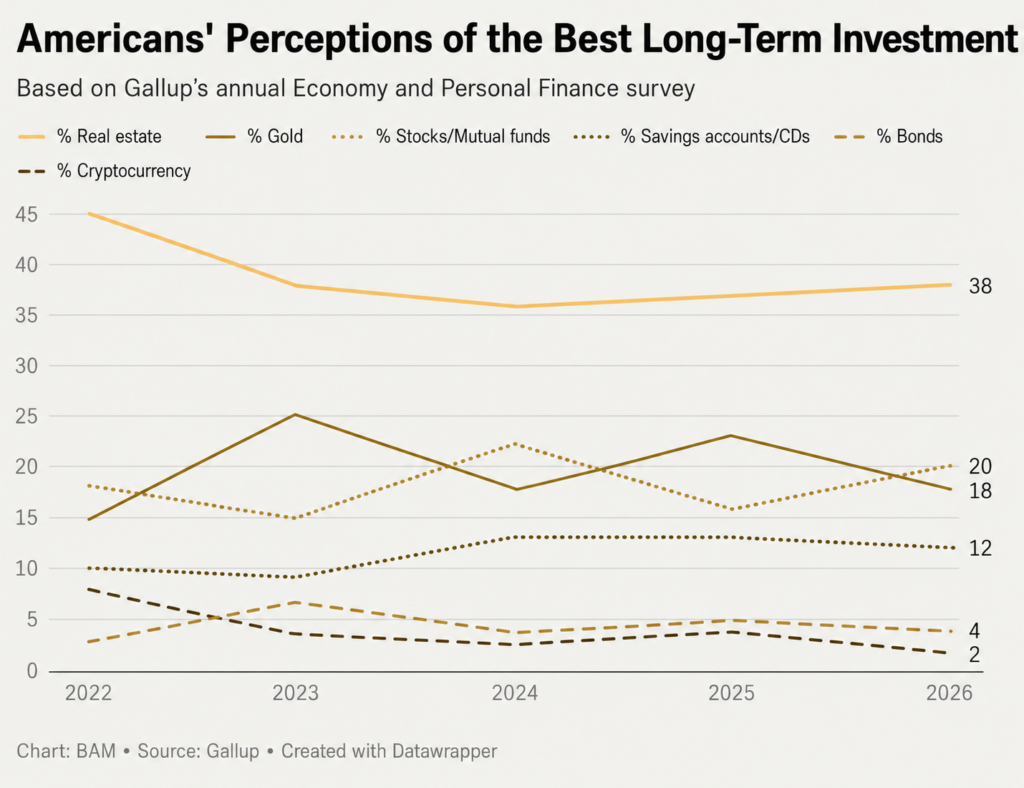
- Real estate: 38%
- Stocks and mutual funds: 20%
- Gold: 18%
- Savings accounts and CDs: 12%
- Cryptocurrency: 4%
- Bonds: 2%
Real estate received nearly twice as many votes as stocks, the second-place choice. It also increased slightly from 37% in 2025.
Real Estate Has Led for 14 Straight Years
Real estate has ranked first every year since 2013, making 2026 its 14th consecutive year at the top.
That streak has survived:
- A global pandemic
- Rapidly rising home prices
- Higher mortgage rates
- Inflation concerns
- Stock market volatility
- The rise of cryptocurrency
Before the current streak began, confidence shifted during periods of economic uncertainty. Savings accounts and CDs led during parts of the 2008 financial crisis, while gold took the top spot in 2011 and 2012. Real estate reclaimed first place in 2013 and has remained there since.
Why Real Estate Continues to Stand Out
Real estate is different from most investments because it is both an asset and something you can use.
A primary residence can provide:
- Potential appreciation as property values increase
- Equity growth as the mortgage balance is paid down
- Predictable housing costs with a fixed-rate mortgage
- Leverage, allowing buyers to control a larger asset with a smaller initial investment
- A place to live, customize, and build a life
There is also a psychological difference. A stock price can change every second. A home is tangible. You can see it, improve it, live in it, and eventually sell it.
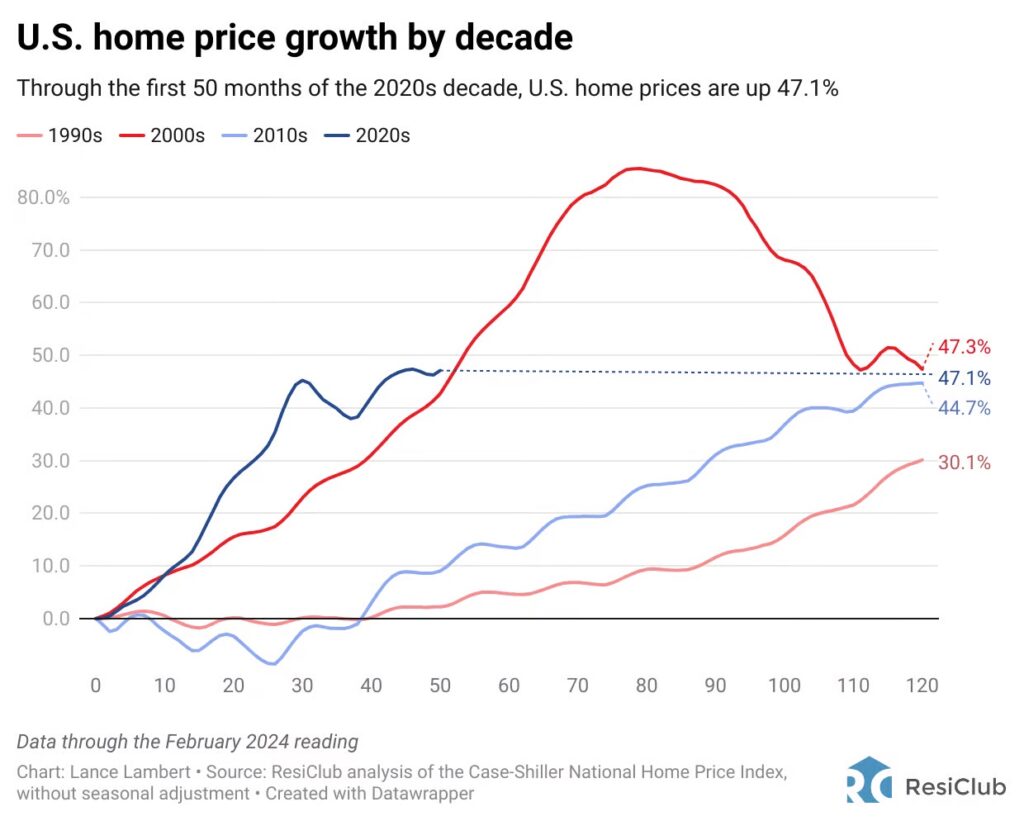
Nationally, the S&P Cotality Case-Shiller Home Price Index increased from approximately 76.9 in January 1990 to 330.9 in April 2026. That represents roughly 330% growth in national home prices over that period.
Source: ResiClub
The Important Reality Check
Gallup’s poll measures what Americans believe, not which investment is guaranteed to deliver the highest return.
Stocks have historically offered strong long-term growth and are easier to buy, sell, and diversify. Real estate comes with expenses that a home-price index does not reflect, including:
- Mortgage interest
- Property taxes
- Insurance
- Maintenance and repairs
- Buying and selling costs
- Renovations and improvements
Real estate can also lose value, and performance varies significantly by location, property type, purchase price, and holding period.
In other words, a house can be a strong long-term investment without automatically being a good purchase at any price.
What This Means for Homebuyers
The goal should not be to buy simply because real estate won a poll. The goal is to purchase the right property, at a sustainable cost, on a timeline that supports your plans.
Before buying, ask:
- Can I comfortably afford the full monthly cost?
- Do I have money left for maintenance and emergencies?
- Am I likely to keep the home long enough to offset transaction costs?
- Does the location support future resale?
- Am I buying a property that future buyers are likely to want?
- Would waiting put me in a stronger financial position?
Sometimes buying now is the smart move. Sometimes the better long-term strategy is to pause, save more, or wait for the right property.
Make the Investment Fit Your Future
Real estate has remained America’s favorite long-term investment because it can provide stability, equity, and a place to call home. But the strongest investment is not simply the property you can buy. It is the one that fits your finances, timeline, and future goals.
If you are deciding whether to buy now, wait, or reconsider a particular property, we can help you pressure-test the numbers, evaluate resale potential, and identify the risks before you commit. We are not here to talk you into a move. We are here to help you make one that still feels smart years from now!